
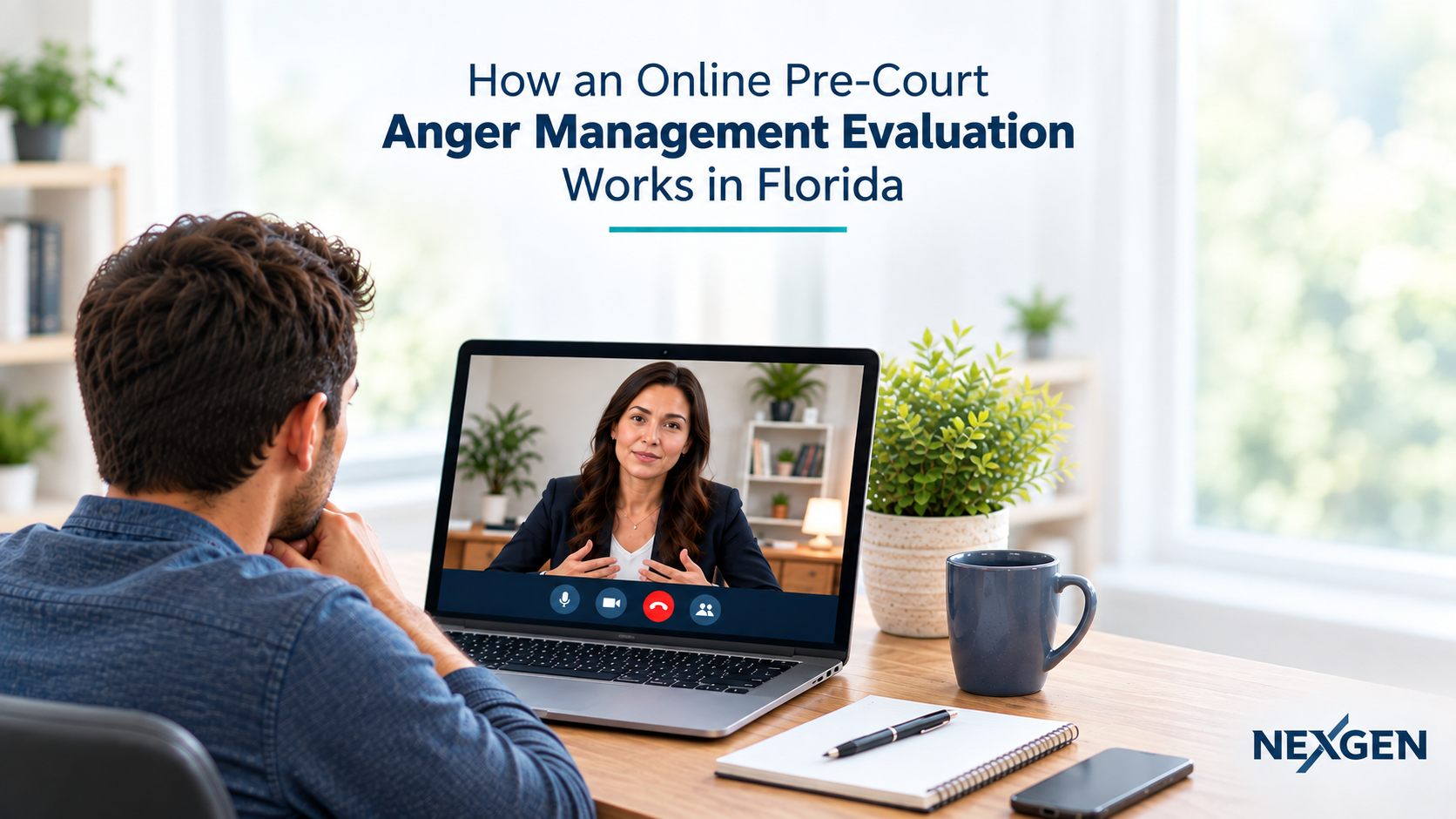
How an Online Pre-Court Anger Management Evaluation Works in Florida

If you are considering an anger management evaluation before a court date, you may be wondering what the counselor will ask and what you will receive afterward. At NeXgen Therapies, a Florida-licensed mental health counselor (LMHC) conducts the evaluation by secure video and prepares a written summary. You can review the findings and discuss them with your attorney before deciding whether to share the document.

What is an anger management evaluation?

It is a clinical conversation about anger-related concerns, relevant history, responses to difficult situations, and the circumstances that brought you to the appointment. The counselor considers the information you provide, documents findings, and makes recommendations when appropriate. It is not a pass-or-fail test, and the evaluation does not automatically require classes.

NeXgen offers this service as a pre-court option for people who want to prepare before a hearing or other formal proceeding. If you have instructions from an attorney or a receiving organization, review them before booking so you understand the type of documentation requested. The receiving party decides whether to accept any evaluation summary.

What happens before, during, and after the appointment?

  1. Request an evaluation.  Use NeXgen’s online scheduling portal or call the office. Share your upcoming date and any instructions relevant to the evaluation.
  2. Complete the intake.  Fill out the forms in the client portal. If an attorney has given you relevant paperwork, you can provide it for the clinician to review. Complete information and any requested documents are important to the evaluation and report timeline.
  3. Meet with the counselor online.  Join from a private place with a reliable connection. The Florida-licensed LMHC will ask about your circumstances and anger-related patterns. Give accurate answers, including context you believe the counselor should understand.
  4. Receive and review the summary.  Following the evaluation and receipt of requested information, NeXgen targets delivery of the evaluation summary within 48 hours. The clinician may recommend next steps, including classes when clinically indicated; classes are not an automatic part of every evaluation.

How can I prepare for the video session?

Set aside uninterrupted time, test your camera and internet connection, and choose a place where others cannot overhear you. The U.S. Department of Health and Human Services offers practical telehealth privacy tips, including using a private location and avoiding public Wi-Fi where possible.

Have any attorney instructions and relevant documents ready. Know your court date, if one has been set. You do not need to prepare a polished account of what happened; the clinician needs your own accurate description. For questions about legal requirements or how to use a report in your case, consult your attorney.

Who sees my evaluation summary?

NeXgen handles client records under applicable privacy rules. You may review its Notice of Privacy Practices for details. Sharing records with an attorney, court, or another third party generally requires written authorization unless disclosure is otherwise permitted or required by law. You can also verify a Florida health professional’s license through the state licensing board.

Common questions

How much does the evaluation cost?

NeXgen lists its online anger management evaluation at $186. The service is private-pay; check the current price and appointment terms before scheduling.

Will I need to take anger management classes?

The counselor makes recommendations based on the evaluation. If classes are indicated, NeXgen discusses the separate class service and fee afterward. An evaluation alone does not predetermine that recommendation.

Will the report affect my case?

That decision belongs to the recipient and, for legal strategy, your attorney. A completed evaluation does not guarantee acceptance or a particular outcome.

Schedule your pre-court evaluation

Read more about NeXgen’s online anger management evaluation or request an appointment through the client portal. You can also call (866) 663-9436 Monday through Friday, 9 a.m. to 5 p.m. Eastern Time. Schedule early enough to complete intake, attend the session, and review your summary before any deadline.

NeXgen Therapies does not provide legal advice. Acceptance of NeXgen’s services or documentation may vary by court, agency, or other recipient, as each recipient establishes its own requirements.

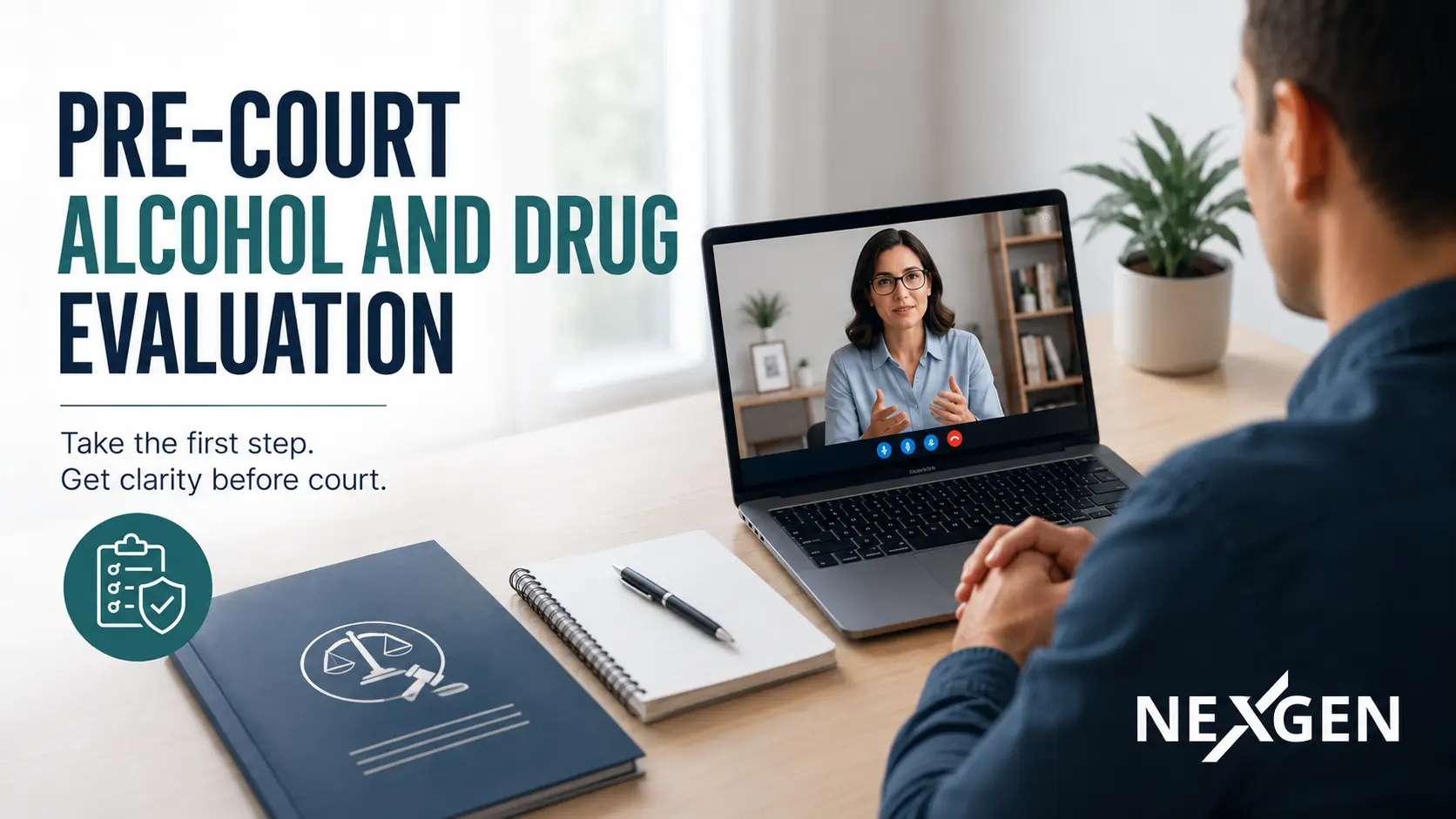
Pre-Court Evaluations in Florida: What They Are and What They Are Not

When a court date is approaching, people are often told to “get an evaluation” without much explanation. That vague phrase is where mistakes begin. An alcohol and/or drug evaluation is not the same service as a mental health evaluation, and neither one is automatically the same thing as a pretrial risk assessment used by a court system. Before scheduling anything, the first question should be simple: What, exactly, has been requested?

What “Pre-Court” Means at NeXgen

At NeXgen Therapies, pre-court describes timing. The evaluation is completed before a scheduled court date so the client has documentation available for review. The term does not mean that the service was ordered, approved, or guaranteed to be accepted by a court.

NeXgen Therapies offers pre-court alcohol and/or drug evaluations conducted by Mental Health Counselors licensed in the State of Florida (LMHCs). NeXgen also offers online anger management, domestic violence-related, and mental health evaluations. Florida law defines the practice of mental health counseling to include methods used to evaluate and assess several kinds of mental and behavioral concerns, including alcohol and/or drug concerns. You can read that scope directly in Florida Statute 491.003. The clinician must still work within the limits of the license, training, and the specific evaluation requested.

A Pre-Court Evaluation Is Not a Pretrial Risk Assessment

The words sound similar, but the services are not interchangeable. A private clinical evaluation looks at the area named in the referral or request and results in an evaluation summary. A pretrial risk assessment may be a justice-system tool with a very different purpose.

For example, the federal judiciary explains that its Pretrial Risk Assessment is used by U.S. probation and pretrial services officers to estimate risks such as failure to appear, new criminal activity, or technical violations. The assessment is used with an investigation to inform release or detention recommendations. That description is available from the Administrative Office of the U.S. Courts. NeXgen does not provide that federal instrument, conduct a court pretrial-services investigation, or make release or detention recommendations.

If an attorney, court, probation office, employer, or agency uses the phrase “pretrial assessment,” ask for the requirement in writing. Do not assume the requested service is a mental health or alcohol and/or drug evaluation.

What the Online Evaluation Process Looks Like

The process begins with intake forms and any instructions or records related to the request. The client then meets privately by video with a licensed clinician, who asks structured questions, reviews the information provided, and prepares an evaluation summary based on the available information.

Florida law expressly includes assessment and evaluation within telehealth and requires a telehealth provider to follow the same professional standard that applies to in-person care. It also requires telehealth services to be documented in the medical record. Those requirements appear in Florida Statute 456.47.

NeXgen typically provides the completed evaluation summary within 48 hours after the appointment, provided all requested information has been received. The current process and timing are explained on NeXgen’s online pre-court evaluation page. If documents are missing or the clinician needs clarification, the summary may take longer. That is why scheduling at the last minute is a poor gamble.

Privacy Still Depends on the Setting

An online appointment removes the drive to an office, but it does not remove the need for privacy. The U.S. Department of Health and Human Services recommends joining telehealth visits from a private location, using a personal device when possible, avoiding public Wi-Fi, and using headphones when other people may be nearby. Its full list of telehealth privacy and security tips is practical and worth reviewing before the appointment.

Questions to Answer Before Scheduling

A fast appointment is useless if it produces the wrong document. Before paying or selecting a date, confirm:

The request: Who requested the evaluation and what exact type is required?

The provider: Does the recipient require a particular license, certification, testing instrument, report format, or provider?

The format: Will an online evaluation be accepted, or is an in-person appointment required?

The deadline: Is there enough time for records to be reviewed and questions to be resolved?

The delivery: Should the summary go to the client, the attorney, or another recipient, and what written authorization is needed?

The program: Is a specialized or state-certified program required instead of a general clinical evaluation or educational class?

What the Documentation Can and Cannot Do

A properly completed evaluation can give the client and attorney a professional summary to review while the case is pending. With appropriate authorization, it may also be shared with another identified recipient when permitted by law. It should not be marketed as proof of accountability, a guarantee of acceptance, or a tool designed to influence bail, court conditions, or the final result of a case.

Because each case is different, you should consult your attorney regarding whether and how the evaluation may be used in your case.

The Practical Bottom Line

The real benefit of starting before court is time: time to identify the correct service, gather the requested records, complete the appointment, and address questions before a deadline. The goal is not to make promises about a legal outcome. It is to complete the right process carefully and have the correct documentation available when it is needed.

To review NeXgen’s current online evaluations and request an appointment, visit NeXgen Therapies.

Sources and Further Reading

Florida Statute 491.003 – Mental health counseling scope and definitions

Florida Statute 456.47 – Use of telehealth to provide services

U.S. Courts – Pretrial Risk Assessment

U.S. Department of Health and Human Services – Telehealth privacy and security tips

NeXgen Therapies – Online pre-court evaluation process

Important Information

NeXgen Therapies is a private-pay provider. NeXgen does not accept insurance or bill Medicare, Medicaid, or other government reimbursement programs. Participation in or completion of an evaluation, class, or program does not guarantee a legal outcome.

NeXgen does not provide legal advice. Acceptance of NeXgen’s services or documentation may vary by court, agency, or other recipient, as each recipient establishes its own requirements.

What Is a Pre-Court Alcohol and Drug Evaluation? A Complete Guide

When an alcohol- or drug-related allegation leaves you wondering what you can do before court, waiting around rarely makes the situation feel any clearer. A Pre-Court alcohol and drug evaluation gives you a way to begin the clinical process, understand the findings, and have professional documentation in hand while your case is still pending.

Take a breath. This is not a courtroom, an interrogation, or a pass-or-fail test. It is a private, structured conversation with a licensed clinician, and the process is usually far more straightforward than people expect.

Start With What Pre-Court Means

Pre-Court means choosing to complete services before your case reaches its next stage. The evaluation is conducted by a state-licensed mental health counselor (LMHC), who reviews your history, the events surrounding the allegation, and any relevant records you provide. The clinician then prepares an individualized evaluation summary that may include findings and recommendations.

NeXgen’s Pre-Court services are independent of the court and all government agencies. NeXgen does not decide what happens in a legal case, and completing an evaluation does not guarantee acceptance or any particular outcome. The value is simple: you can complete the process earlier, review the clinical recommendations, and decide with your attorney whether the documentation should be shared.

Why Someone May Choose a Pre-Court Evaluation

People choose a Pre-Court evaluation because they want to act while their case is pending instead of waiting until later. An attorney may suggest beginning early, or a person may simply want a professional assessment and a clearer understanding of any recommended next steps. Starting early also allows time to receive the evaluation summary, review it, and address recommendations before the next court date.

What Happens During the Evaluation

At the scheduled appointment, you meet privately with a state-licensed LMHC through a secure online video platform. The counselor asks structured questions about alcohol or drug use, personal history, health, and the circumstances connected to the evaluation. If you have relevant attorney paperwork, an arrest affidavit, or other records, the clinician may review those as part of the assessment.

Most evaluations take about 45 to 60 minutes, although the exact time depends on the information that must be reviewed. After the appointment and receipt of any requested information, the clinician prepares your written evaluation summary. NeXgen delivers the evaluation summary within 48 hours.

Why the Clinician’s License Matters

A clinical evaluation should be more than a generic online questionnaire with an automatic result. The National Institute on Drug Abuse maintains a chart of evidence-based screening and assessment tools, including adult tools that may be administered through a clinician interview. That supports the basic point: sound screening and assessment use structured methods, not guesswork.

Florida’s LMHC licensure standards provide a useful example of the training behind the license. Current requirements include graduate-level coursework in individual evaluation and assessment and substance abuse, a national clinical examination, and substantial supervised clinical experience. That background is why the clinician’s judgment matters.

How NeXgen’s Pre-Court Services Work

NeXgen Therapies specializes in online Pre-Court evaluations and educational classes. Clients attend from home through a secure, private video platform. There is no commute, waiting room, or need to take half a day away from work. NeXgen is private pay only and does not accept insurance or bill government reimbursement programs.

The evaluation is the clinical starting point. The LMHC makes independent recommendations based on the individual assessment, so an evaluation does not automatically mean classes will be recommended. When education is clinically appropriate, NeXgen also offers online alcohol and drug classes and provides a Certificate of Completion after the program is completed.

How to Prepare

A few simple steps can keep the process moving:

  • Gather relevant records. Have any attorney paperwork, arrest affidavit, prior treatment information, or other documents connected to the evaluation available before the appointment.
  • Know your timeline. Schedule early enough to complete the evaluation, receive the summary, and review any recommendations before your next court date.
  • Be direct and honest. The clinician is not there to trap you. Accurate information is necessary for an individualized evaluation and meaningful recommendations.
  • Protect your privacy. Because behavioral health discussions are sensitive, federal telehealth guidance recommends using a private location, avoiding public Wi-Fi, and using a password-protected device.

The Bottom Line

NeXgen’s Pre-Court services give you a private, professional way to begin addressing an alcohol- or drug-related concern while your case is pending. You can complete the evaluation online, receive your evaluation summary within 48 hours after the appointment and receipt of requested information, and have time to consider the clinician’s recommendations. That is the Pre-Court advantage: the work is underway and your documentation is in hand before court.

FAQs

  1. How long does a Pre-Court alcohol and drug evaluation take?

Most evaluations take about 45 to 60 minutes. The exact time can vary based on the client’s history, the type of evaluation, and the amount of information the clinician reviews.

  1. When will I receive my evaluation summary?

NeXgen delivers the evaluation summary within 48 hours after the appointment and receipt of any requested information.

  1. Does a Pre-Court evaluation guarantee acceptance or a legal outcome?

 Acceptance of NeXgen’s services or documentation may vary by court, agency, or other recipient, as each recipient establishes its own requirements. Participation in or completion of an evaluation does not guarantee acceptance or any legal outcome.

Sources and References

[1] National Institute on Drug Abuse, ‘Screening Tools and Prevention’ (updated September 24, 2025). View source

[2] Florida Board of Clinical Social Work, Marriage & Family Therapy and Mental Health Counseling, ‘Licensed Mental Health Counselor.’ View source

[3] Telehealth.HHS.gov, ‘Protecting Patients’ Privacy’ (updated July 29, 2025). View source

[4] NeXgen Therapies, ‘Pre-Court Evaluations and Classes’ and ‘Online Alcohol/Drug Evaluation’ (accessed August 28, 2026). View source

[5] NeXgen Therapies, ‘Prime For Life Program,’ payment notice (accessed August 28, 2026). View source

What Is an Online Pre‑Court Evaluation and How Does It Work?

Being proactive and getting an evaluation before your court date can help you better understand and prepare for the process ahead. However, scheduling an evaluation may still feel overwhelming, especially when you are already managing legal concerns, work, family, and other responsibilities.

An online pre‑court evaluation offers a more convenient option. You can meet privately with a state‑licensed mental health counselor through a secure video appointment without traveling to an office or sitting in a waiting room. The evaluation remains professional and structured while reducing many of the scheduling and transportation challenges.

Here is what an online pre‑court evaluation involves, how the process works, and what you should confirm before scheduling.

What Exactly Is a Pre‑Court Evaluation?

A pre‑court evaluation is a professional clinical assessment conducted by a state‑licensed mental health counselor (LMHC). It may be requested by an attorney, court, probation office, employer, or another agency before a hearing, sentencing, employment decision, or other proceeding.

Depending on the circumstances, the requested service may involve an alcohol and drug evaluation, anger management evaluation, domestic violence‑related evaluation, or mental health evaluation. During the appointment, the clinician asks structured questions, reviews relevant information, and prepares an evaluation summary based on the information available.

Requirements are not identical in every case. A court or agency may require a particular provider credential, report format, testing method, program, or in‑person appointment. Confirm the exact requirement with the requesting party or your attorney before scheduling.

Why an Online Appointment Can Make a Real Difference

A traditional appointment may require travel, time away from work, childcare arrangements, and additional waiting. An online appointment removes the commute and allows you to participate from an appropriate private setting with a reliable internet connection.

NeXgen Therapies provides private online appointments through a secure video platform with state‑licensed LMHCs. Services are available only when a NeXgen clinician is licensed or otherwise authorized to serve the client in the state where the client is physically located at the time of the appointment.

How the Process Works

  1. Request the Evaluation: Contact NeXgen Therapies and identify the type of evaluation you believe is required. If you have instructions from an attorney, court, probation office, employer, or agency, provide them before the appointment whenever possible.
  2. Complete the Intake Forms: Complete the required registration and intake documents. These forms give the clinician background information and help identify any records that may need to be reviewed.
  3. Attend the Secure Video Appointment: Meet privately with a state‑licensed LMHC at your scheduled appointment time. The clinician will ask questions about your history, current circumstances, and the reason for the evaluation. Appointment length varies according to the evaluation and the information involved.
  4. Receive the Evaluation Summary: NeXgen typically provides the completed evaluation summary within 48 hours after the appointment, provided all required information has been received. You may share the summary with the requesting party or authorize NeXgen to release it when permitted by law.

What Should You Have Ready?

Before your appointment, gather any materials that may help the clinician understand the request, including:

  • A valid photo ID.
  • Court, attorney, probation, employer, or agency instructions related to the evaluation.
  • Relevant case, citation, or referral information, when available.
  • Any documents you have been specifically asked to provide.
  • A quiet, private location, a charged device, and a reliable internet connection.

Do not attend while driving or from a public setting where other people can hear the discussion. If privacy or internet access is uncertain, address that before the appointment.

Who Conducts the Evaluation?

The evaluation is conducted by a state‑licensed mental health counselor (LMHC) who is trained to gather relevant clinical information, ask structured questions, and document professional findings. Provider qualifications matter, but a professional license alone does not mean that every court, agency, or jurisdiction will accept every type of evaluation.

Before scheduling, verify the clinician’s credentials and confirm that the requesting party does not require a specialized provider, certified program, specific testing instrument, or in‑person service. Some domestic violence matters, for example, may require a state‑certified intervention program or specialized assessment that is different from general educational or clinical services.

Privacy and Release of Information

Online evaluations should be completed in a private setting. NeXgen uses a secure video platform and privacy‑focused clinical workflows. Information is not automatically sent to an attorney, court, probation office, employer, or agency without the client’s authorization, except when disclosure is otherwise permitted or required by law.

Ask questions before signing any authorization so you understand what information may be released, to whom, and for what purpose.

An Important Note About Court Acceptance

NeXgen Therapies is not a law firm and does not provide legal advice. Participation in or completion of an evaluation does not guarantee acceptance or any particular legal outcome. Requirements and acceptance vary by court, attorney, probation office, employer, and agency.

Frequently Asked Questions

  1. Is an online pre‑court evaluation the same as an in‑person evaluation?

An online evaluation may satisfy the requesting party’s requirements when it is conducted by an appropriately licensed clinician and properly documented. However, some courts or agencies require a specific provider type, format, testing method, certified program, or in‑person appointment. Confirm the requirements before scheduling.

  1. How long does an online pre‑court evaluation take?

An online pre‑court evaluation typically takes 45 to 60 minutes. The exact length may vary depending on the type of evaluation, the records provided, and the amount of information the clinician must review. Once the appointment is completed and all required information has been received, NeXgen Therapies typically provides the evaluation summary within 48 hours. Schedule your appointment early enough to allow time for the evaluation, document review, and any additional information that may be requested before your deadline.

  1. Do I need an attorney referral?

Not necessarily. You may request an evaluation directly. However, when an attorney, court, probation office, employer, or agency has requested the evaluation, obtain the written requirements whenever possible so the clinician can determine whether NeXgen can provide the appropriate service.

  1. Can I complete the appointment from anywhere?

You must be physically located in a state where the clinician is licensed or otherwise authorized to practice. You should also be in a quiet, stationary, private location with dependable internet access. Do not participate while driving.

  1. Will NeXgen send the evaluation summary directly to my attorney or the court?

The evaluation summary is generally provided to the client. NeXgen may release it to another authorized party when the client completes the appropriate authorization and disclosure is permitted by law. Confirm the preferred delivery method before your appointment.

Why Courts Require Evaluations and What to Expect

A man sits in his attorney’s office a few weeks before a scheduled court appearance. He has never been in this position before. The attorney reviews the case, flips through a stack of documents, and then says something unexpected.

“You’ll need an evaluation before your hearing.”

The client immediately has questions. What kind of evaluation? Why is it necessary? What happens during the process?

This reaction is common. Many people hear the term court ordered evaluation for the first time after a legal issue arises. The request can feel intimidating, especially when the stakes seem high. Yet evaluations are often designed to provide information, not punishment.

Courts rely on evaluations because judges need more than allegations, assumptions, or brief statements made during a hearing. They need context.

The Court Wants a Clearer Picture

Legal cases often involve circumstances that are not obvious from police reports or witness testimony alone.

Consider situations involving substance use concerns, anger-related incidents, domestic disputes, or mental health questions. A judge may recognize that understanding the individual’s circumstances could help inform a fair decision.

That is where evaluations become important.

A professional assessment provides insight into a person’s behavior, history, and current situation. Rather than guessing, the court receives information from a qualified evaluator who has spent time speaking directly with the individual.

The goal is not always to identify a problem. Sometimes the evaluation confirms that concerns are minimal or manageable. Other times, it may recommend education, treatment, or additional support.

Life rarely fits neatly into legal paperwork. Evaluations help fill in the gaps.

What Is a Court Ordered Evaluation?

A court ordered evaluation is an assessment requested by a judge, attorney, probation officer, or another legal authority. In some cases, individuals choose to complete an evaluation proactively before appearing in court.

The type of evaluation depends on the circumstances involved.

Common examples include:

  • Alcohol and drug evaluations
  • Anger management evaluations
  • Domestic violence evaluations
  • Mental health evaluations

Organizations like NeXgen Therapies provide these services through licensed mental health professionals who conduct confidential interviews and prepare reports that may be submitted to courts, attorneys, or other authorized parties.

Each evaluation focuses on gathering relevant information while remaining objective.

That objectivity matters more than many people realize.

The Process Is Usually Less Dramatic Than Expected

People often imagine an interrogation when they think about legal evaluations.

The reality tends to be much different.

Most evaluations begin with a private conversation between the individual and the evaluator. Questions may cover personal history, current circumstances, relationships, employment, stressors, and any issues connected to the legal matter.

Some evaluations may include standardized questionnaires or screening tools. Others focus more heavily on interviews.

There is no single script.

The evaluator’s responsibility is to understand the situation as accurately as possible.

One observation that surprises many participants is how normal the conversation feels. While the subject matter can be serious, the setting is generally structured to encourage honest communication rather than confrontation.

Why Honesty Matters

People sometimes assume they should say whatever sounds best.

That approach rarely helps.

Experienced evaluators speak with individuals from many different backgrounds and circumstances. Inconsistencies often become noticeable during the process.

Providing accurate information typically leads to a more reliable assessment.

This does not mean someone must share every detail of their life story. It simply means being truthful when answering questions and discussing the circumstances that led to the evaluation.

Honesty creates a stronger foundation for the final report.

Understanding the Written Evaluation for Court

After the assessment is completed, the evaluator prepares a written evaluation for court.

This document summarizes relevant findings and professional observations. Depending on the situation, it may also include recommendations.

A written evaluation for court can help legal professionals better understand factors that may not appear elsewhere in the case record.

For example, the report might address:

  • Risk factors
  • Behavioral patterns
  • Mental health concerns
  • Substance use history
  • Educational recommendations
  • Treatment considerations

Every case is different, so reports vary in length and detail.

Some people expect the report to be either completely positive or completely negative. Real evaluations are usually more nuanced than that.

Human behavior is complicated.

A thorough report often reflects that reality.

What Happens After the Evaluation?

The next step depends on the court’s requirements and the specifics of the case.

The completed evaluation may be submitted to an attorney, probation officer, court official, or other authorized recipient. Judges often review these reports alongside other evidence when making decisions.

In some situations, additional classes, counseling, or educational programs may be recommended.

That recommendation should not automatically be viewed as a punishment.

Courts frequently look for solutions that reduce future risk and support long-term positive outcomes.

Preparing for Your Evaluation

Preparation does not require memorizing answers.

Instead, focus on being ready to discuss your situation openly and accurately.

Gather any requested documents beforehand. Arrive on time for your appointment. Take a few moments to think about the events that led to the referral.

Most importantly, approach the process with a willingness to participate honestly.

Individuals who understand the purpose of the evaluation often feel less anxious once the process begins.

Final Thoughts

Facing a legal matter can feel overwhelming. Adding a court ordered evaluation to the situation may create even more uncertainty.

Still, evaluations serve an important purpose. They provide courts with information that helps support informed decisions rather than assumptions.

Whether the concern involves substance use, anger management, domestic violence, or mental health, a professional assessment offers valuable insight into the broader picture.

At NeXgen Therapies, licensed professionals conduct evaluations and educational services designed to help individuals navigate these requirements with professionalism and confidentiality. Their process allows participants to complete evaluations remotely while receiving a timely written evaluation for court when appropriate.

In many cases, the evaluation becomes more than just another legal requirement. It becomes an opportunity to provide context, clarify circumstances, and move forward with greater understanding.

8 Myths About Court-Mandated Counseling Debunked

Court-mandated counseling often comes with a host of misconceptions that can cloud the benefits it provides. This blog aims to clear up the fog surrounding these myths, illuminating the reality of what court-mandated counseling can actually offer individuals and the justice system alike.

1. Court-Mandated Counseling is Punishment

Many people mistakenly perceive court-mandated counseling as a form of punishment. This belief can stem from the association of counseling with wrongdoing or failure. While it’s true that such counseling might be a consequence of legal issues, it’s essential to understand that the primary goal is not to punish, but to promote growth and understanding. Court-mandated counseling serves as a tool designed to help individuals address their behaviors and make positive changes in their lives.

When individuals enter court-mandated counseling, they often find a supportive environment aimed at healing rather than reprimanding. Contrary to the punitive label, this type of counseling is an opportunity for reflection and improvement. It’s more about education and less about punishment—offering participants the chance to learn about their actions and the impacts they have on others. Ultimately, court-mandated counseling can lead to personal development and a renewed sense of purpose.

2. Counseling Will Not Help Me Improve

A common misconception about court-mandated counseling is that it won’t lead to genuine improvement. This skepticism often arises from past negative experiences or a deep understanding of one’s issues. However, research shows that counseling can positively influence individuals, regardless of the circumstances that led them there. Engaging in therapy provides the necessary tools to navigate personal challenges and develop healthier coping mechanisms.

Acknowledging that change takes time is crucial. Many who go through court-mandated counseling report significant improvements in their lives. They learn effective strategies to manage stress, improve relationships, and enhance their overall quality of life. It’s also essential to understand that the effectiveness of counseling is highly dependent on the individual’s willingness to engage in the process. While skepticism is normal, embracing the opportunity can lead to unexpected breakthroughs and personal growth.

3. All Counselors Have the Same Approach

Another prevalent myth is the idea that all counselors operate under a one-size-fits-all approach. This misconception overlooks the diversity in therapeutic styles and methods available. Just like any profession, counselors have their unique techniques, educational backgrounds, and philosophies. They adapt their approach based on individual client needs, creating a more personalized experience.

In fact, when individuals take the time to find the right counselor for them, they can significantly enhance their counseling experience. Different counselors may specialize in various areas, such as trauma, addiction, or family dynamics. It’s important to understand that feeling comfortable with a counselor is key to effective therapy. Therefore, exploring different options within the realm of court-mandated counseling can lead to finding the perfect fit that resonates with the individual.

4. Only Criminals Are Required to Attend Counseling

The belief that only criminals are subjected to court-mandated counseling is a simplistic view that limits the understanding of its purpose. While legal issues often initiate counseling mandates, it’s an avenue available to a varied demographic. People from different walks of life might find themselves in situations where counseling becomes necessary, not merely as a consequence but as a means of seeking help and support.

Court-mandated counseling can also be a requirement for those dealing with civil matters, such as family disputes or custody battles. These situations often call for therapeutic intervention to facilitate communication and collaboration. In these cases, counseling aims to support families and promote understanding, regardless of any criminal implications. This broader perspective underscores the importance of counseling, showcasing its applicability beyond mere punitive measures.

5. Court-Mandated Counseling is Just a Formality

Some individuals regard court-mandated counseling as merely a procedural formality, dismissing its potential value. This oversimplification negates the deep work that can occur during these sessions. While there may be instances where counseling is seen as a checkbox to complete, many participants discover that it can serve as an eye-opening experience that fosters genuine change.

Instead of viewing it as a formality, individuals should approach counseling with an open mind and heart. Engaging fully can reveal insights and facilitate discussions that resonate on a personal level. Counselors are often equipped to guide individuals through complicated emotional landscapes, pushing the concept of formality aside in favor of meaningful dialogue and personal insight, thus transforming the experience from obligation to opportunity.

6. I Can’t Choose My Own Counselor

A prevalent belief is that individuals cannot select their own counselors in the context of court-mandated counseling. While it is true that certain requirements might limit your options, many jurisdictions allow individuals the freedom to choose their counselor from a list of approved professionals. This flexibility is crucial, as the therapeutic relationship plays an essential role in the success of counseling.

Finding a counselor who matches one’s personality and specific needs can make a substantial difference in the experience. Each counselor possesses unique attributes that resonate differently with individuals. Having the ability to choose can empower participants, fostering a sense of agency in what can feel like an overwhelming process. Engaging with a counselor who understands and supports your journey can lead to transformative outcomes.

7. What Happens in Counseling Stays in Counseling

The popular notion that everything discussed in counseling remains confidential can create a false sense of security. While confidentiality is a cornerstone of therapeutic practice, there are exceptions to consider. In situations where there is a risk of harm to oneself or others, or if there’s a revelation of abuse, counselors are required by law to report such disclosures. Therefore, while many conversations can remain private, it’s crucial to recognize the limits of confidentiality.

This understanding does not diminish the overall experience of counseling. Instead, it emphasizes the importance of open and honest communication. Participants should feel safe to express their feelings and thoughts without fear of judgment, provided they understand the boundaries. Counselors strive to create a safe space for sharing whilst also guiding individuals through processing sensitive information responsibly.

8. Counseling is Only for Mental Health Issues

The idea that court-mandated counseling is exclusively for those dealing with mental health issues is another myth that deserves debunking. While mental health is a significant focus, counseling can be beneficial for a myriad of reasons. Individuals may attend counseling for relationship issues, communication barriers, or life transitions—areas that, while not classified as mental health issues, are nonetheless deserving of attention and care.

This expansive view of counseling showcases its versatility. Court-mandated counseling can effectively address various challenges people face in their daily lives. By providing tools to navigate relational dynamics and improve communication, counseling promotes overall well-being. As a result, it can lead to healthier interactions that substantially enhance one’s quality of life, paving the way for growth and self-discovery beyond mental health concerns.

How Florida’s Court Mandated Therapy Can Change Your Perspective on Personal Growth

Imagine a scenario where a legal directive not only guides your actions but also becomes a catalyst for personal transformation. In Florida, court-mandated therapy is not just a legal requirement; it is a unique opportunity for individuals to embark on a journey of self-discovery and growth. Through this unconventional path, individuals can gain valuable insights, confront challenges, and emerge with a renewed outlook on life. Dive into the insightful world of court-mandated therapy and discover how these judicial interventions can profoundly impact personal development.

Understanding the Purpose of Court Mandated Therapy

Court-mandated therapy in Florida serves as a means to address various legal issues by incorporating therapeutic interventions into the judicial process. It aims to not only punish offenders but also rehabilitate them, fostering personal insight and behavioral changes. Instead of viewing therapy as a punitive measure, the court mandates aim to create a space for individuals to introspect, heal, and proactively work towards personal growth.

The primary goal of court-mandated therapy is to help individuals understand the underlying causes of their behaviors, address mental health issues, and develop coping mechanisms to lead a more productive life. By integrating therapy into the legal system, Florida offers a unique approach to fostering rehabilitation and reducing the likelihood of reoffending. Through these court-ordered sessions, individuals are encouraged to explore their emotions, behaviors, and thought patterns, laying the groundwork for significant personal transformation.

Moreover, court-mandated therapy provides a structured environment for individuals to confront challenging aspects of their lives under the guidance of trained therapists. This therapeutic setting creates a safe space for self-reflection, emotional processing, and skill-building, enabling participants to navigate their personal struggles and embark on a journey towards holistic well-being. By actively engaging in the therapy process, individuals can not only fulfill legal obligations but also emerge as empowered agents of their own growth.

Exploring the Transformative Effects of Therapy Orders

The transformative effects of therapy orders mandated by the court extend far beyond legal compliance. Individuals undergoing court-mandated therapy in Florida often experience profound shifts in their perspectives, behaviors, and interpersonal dynamics. Through the therapeutic process, participants gain tools to manage stress, regulate emotions, and enhance their communication skills, leading to more positive interactions in various aspects of their lives.

Court-mandated therapy acts as a catalyst for self-awareness and personal growth, prompting individuals to explore their core beliefs, values, and motivations. By delving into their inner psyche and addressing deep-seated issues, participants can break free from destructive patterns and cultivate healthier habits, fostering resilience and emotional intelligence. The transformative journey facilitated by therapy orders empowers individuals to make conscious choices, improve relationships, and embrace a more fulfilling life path.

Furthermore, the therapeutic process under court mandates encourages individuals to take ownership of their actions, acknowledge past mistakes, and commit to positive change. By accepting accountability and engaging in the therapy sessions with openness and dedication, participants lay the groundwork for profound personal transformations. Through introspection, introspection, and self-discovery, individuals can transcend perceived limitations, heal from past wounds, and cultivate a renewed sense of purpose and direction.

Embracing personal growth through court-mandated therapy involves a willingness to engage in self-exploration, vulnerability, and reflection. By actively participating in therapy sessions, individuals can harness the opportunity for introspection and emotional healing, paving the way for transformative growth. While the initial mandate may be a legal requirement, the journey towards personal development is a voluntary and empowering choice that individuals can make along the way.

The legal interventions of court-mandated therapy provide individuals with a structured framework to address underlying issues, develop coping strategies, and enhance their emotional well-being. Through the guidance of qualified therapists and court-appointed programs, participants can navigate the complexities of their emotions, relationships, and behavioral patterns, leading to profound shifts in their personal narratives. Embracing the therapeutic process with an open mind and commitment to change can open doors to new possibilities and self-discovery.

By viewing court-mandated therapy as a platform for personal growth and self-improvement, individuals can leverage the support, insights, and tools offered during the therapeutic journey to foster resilience, self-awareness, and positive change. The synergy between legal mandates and therapeutic interventions creates a unique opportunity for individuals to embark on a transformative path towards holistic well-being, emotional healing, and sustainable personal growth.

Challenges and Triumphs in Court-Directed Therapeutic Journey

The court-directed therapeutic journey presents a blend of challenges and triumphs that individuals must navigate to realize the full potential of their personal growth. While the initial resistance or reluctance to engage in therapy may arise, embracing the therapeutic process with an open mind and willingness to change can lead to significant breakthroughs. Participants may encounter emotional barriers, internal conflicts, or resistance to vulnerability, but overcoming these obstacles can pave the way for profound transformation.

As individuals progress through the court-directed therapy sessions, they may confront deep-seated emotions, traumas, or ingrained patterns of behavior that require careful exploration and healing. The therapeutic journey is not without its hurdles, yet each challenge presents an opportunity for individuals to delve deeper into their psyche, confront their shadows, and emerge stronger and more resilient. By navigating these challenges with courage and determination, individuals can unlock their inner potential and cultivate lasting personal growth.

Moreover, the triumphs experienced during the court-directed therapeutic journey are a testament to the resilience, courage, and growth of individuals undergoing this transformative process. Celebrating small victories, breakthrough moments, and newfound insights can bolster confidence, motivation, and commitment to personal development. The fusion of challenges and triumphs in the therapeutic journey creates a rich tapestry of experiences that shape individuals’ narratives, foster emotional healing, and propel them towards a brighter, more empowered future.

Nurturing Self-Discovery Amidst Judicial Mandates

Amidst judicial mandates and legal obligations, court-mandated therapy offers a unique opportunity for individuals to nurture self-discovery, introspection, and personal growth. By delving into the depths of their emotions, behaviors, and thought patterns, participants can unravel the layers of their psyche, uncover hidden truths, and embark on a journey of self-awareness. The therapeutic space created by court mandates becomes a fertile ground for individuals to cultivate authenticity, resilience, and self-empowerment.

Court-mandated therapy serves as a compass for self-discovery, guiding individuals towards a deeper understanding of themselves, their motivations, and their aspirations. Through the introspective process facilitated by therapy sessions, participants can unearth unresolved issues, untangle internal conflicts, and pave the way for emotional healing and growth. Embracing self-discovery amidst judicial mandates requires courage, vulnerability, and a willingness to embrace the transformative power of therapy in unlocking one’s true potential.

As we reflect on Florida’s court-mandated therapy and its intersection with personal growth, we realize the profound impact that external interventions can have on our inner selves. By embracing the challenges, triumphs, and self-discovery that come with court-mandated therapy, individuals can navigate a path towards positive change and self-improvement. Just as the legal system can mandate therapy, it can also be a gateway to a deeper understanding of oneself, leading to a more fulfilling and enriched life journey. Remember, growth knows no bounds, and sometimes, it takes a legal directive to unlock our true potential.

7 Ways Court-Mandated Counseling Can Change Your Life

Court-mandated counseling can often feel daunting, yet it holds the potential to instigate profound transformations in one’s life. Many people enter this journey with skepticism or reluctance, but it can pave the way for unexpected growth, healing, and self-discovery. Let’s explore some powerful ways that engaging in this process can positively impact your life.

1. Understanding Yourself on a Deeper Level

One of the most significant advantages of court-mandated counseling is the opportunity for deep self-exploration. In the safe space of therapy, individuals can confront aspects of themselves that may have been buried for years. With the guidance of a trained counselor, thoughts and feelings surrounding life experiences can emerge, leading to a greater understanding of personal motivations and behaviors. This journey often unveils patterns that influence our relationships and choices.

Through this introspection, participants learn to recognize their emotional triggers and reactions. For instance, understanding why one responds with anger in certain situations can lead to healthier ways of processing those emotions. By unveiling the layers of one’s personality, individuals are empowered to make conscious choices rather than reacting out of habit. This clarity not only fosters personal growth, but it also cultivates self-acceptance and compassion.

2. Improving Communication Skills

Effective communication is a cornerstone of successful relationships, and court-mandated counseling offers a structured environment to enhance these skills. Many individuals enter counseling feeling misunderstood, but as conversations unfold, they learn how to articulate their thoughts and feelings more clearly. Counselors often introduce techniques that encourage active listening and open dialogue, which are essential for constructive conversations.

This focus on communication extends beyond the therapist’s office. Participants often find themselves using these skills in everyday interactions, whether with family, friends, or colleagues. The ability to express oneself without fear of judgment can transform relationships, fostering deeper connections and reducing conflicts. As communication improves, individuals may find a newfound sense of empowerment, boosting their confidence both personally and professionally.

Moreover, the counseling environment encourages vulnerability, which inherently strengthens communication. By sharing fears and desires openly, individuals cultivate an atmosphere of trust, allowing others to do the same. This cycle of sharing can lead to more honest and fulfilling relationships, ultimately supporting a healthier emotional landscape.

3. Building Healthy Relationships

Court-mandated counseling can serve as a catalyst for building healthier relationships. Individuals often come from backgrounds that may not have demonstrated effective interpersonal skills. Through therapy, they can identify toxic patterns that lead to unhealthy dynamics, whether it’s in romantic partnerships or friendships. By addressing these issues in a clinical setting, clients can learn the importance of boundaries and mutual respect.

In counseling, individuals not only explore their relational patterns but also gain insight into what they desire from others. This clarity empowers them to seek out relationships that align with their values and needs. As they practice healthier interactions in therapy, these new skills translate to the outside world, transforming their relationships into supportive and nurturing ones.

4. Developing Coping Mechanisms for Stress

Stress is an inevitable part of life, and learning how to cope with it effectively is crucial for personal well-being. Court-mandated counseling introduces participants to various therapeutic exercises designed to mitigate stress. Techniques such as mindfulness, journaling, or breathing exercises become invaluable tools for navigating life’s challenges. By incorporating these practices into their daily routines, individuals can better manage emotional upheavals and daily stresses.

Additionally, therapy provides a safe space to explore the roots of stress, helping individuals understand what triggers their anxiety and stress responses. This awareness is a powerful step towards reducing their impact. As participants develop proactive coping strategies, they also learn to view challenges from a different perspective, cultivating resilience and adaptability.

5. Fostering Accountability and Responsibility

Court-mandated counseling encourages a level of accountability that can significantly enhance personal growth. By participating in therapy, individuals confront their choices and behaviors with the support of a professional who promotes self-reflection. This accountability helps clients pick apart the consequences of their actions, promoting a deeper understanding of how their actions affect themselves and others.

Through this exploration, participants often realize the importance of taking responsibility for their lives. They begin to see that they have the power to influence their circumstances through their decisions. As this realization takes root, individuals become more empowered to make proactive changes, leading to healthier habits and relationships.

6. Navigating Life Challenges with Confidence

Life is filled with challenges, both expected and unforeseen. Court-mandated counseling offers individuals the tools to navigate these complexities with greater confidence. Armed with new coping mechanisms and communication skills, participants are better prepared to face conflict, stress, and change head-on. They often report feeling more equipped to handle life’s ups and downs, having learned to approach situations with a calm and collected mindset.

Furthermore, the support of a counselor can provide reassurance during turbulent times. Knowing that there’s a professional guiding you through tough moments can alleviate feelings of isolation and uncertainty. This additional layer of support encourages individuals to step outside their comfort zones and embrace challenges rather than shy away from them.

7. Encouraging Long-term Personal Growth

Perhaps one of the most profound impacts of court-mandated counseling is the encouragement of long-term personal growth. Rather than being just an immediate solution to life’s problems, therapy empowers individuals to embark on a journey of ongoing self-improvement. Participants are introduced to the concept of lifelong learning, where they can continuously reflect on their lives and strive for betterment.

This ethos of growth fosters an appreciation for the learning process itself. Individuals start to view mistakes and setbacks not as failures but as opportunities for learning and insight. This shift in perspective can lead to more significant changes in behavior and outlook on life, creating a positive feedback loop that encourages further growth.

Through counseling, participants can establish personal goals and develop a plan to achieve them. Whether it’s furthering their education, enhancing career prospects, or improving health, the skills acquired in therapy serve as a foundation for pursuing any ambition. As their self-confidence blossoms, they become proactive agents of change in their own lives.

Exploring the Benefits of Online Counseling for Personal Growth

In a fast-paced world where stress levels are high and time is at a premium, online counseling solutions offer a convenient and effective way to prioritize mental health. This modern approach to therapy provides accessible support for personal growth and self-improvement, catering to individuals seeking guidance and assistance in overcoming obstacles.

Understanding the Evolution of Online Counseling

Online counseling solutions have evolved significantly over the years, adapting to meet the changing needs of individuals seeking mental health support. The integration of technology and therapy has paved the way for accessible and innovative approaches to counseling.

One of the key aspects of the evolution of online counseling is the shift towards creating a more personalized and client-centered experience. Therapists now have the tools to tailor their approach to each individual’s unique needs, fostering a more effective and engaging therapeutic relationship.

Moreover, the evolution of online counseling has seen an increase in the diversity of therapeutic modalities available. From traditional psychotherapy techniques to newer, more specialized interventions, individuals now have a wide range of options to choose from based on their preferences and goals.

Benefits of Online Counseling for Personal Development

The benefits of utilizing online counseling solutions for personal development are manifold and impactful. One of the primary advantages is the flexibility that online therapy offers, allowing individuals to schedule sessions at a time that suits them best.

Additionally, online counseling is often more affordable than traditional in-person therapy, making it a cost-effective option for those looking to prioritize their mental health. The comfort and convenience of accessing therapy from home also contribute to its appeal and effectiveness.

Anonymity is another significant benefit of online counseling, providing individuals with a safe space to discuss their thoughts and feelings without fear of judgment. The diverse range of therapists available online ensures that individuals can find a counselor who resonates with them and their specific needs.

Furthermore, online counseling eliminates geographical barriers, allowing individuals to connect with therapists from around the world. This accessibility ensures that more people have the opportunity to seek the support they need for personal growth and emotional well-being.

Exploring the Therapeutic Techniques in Online Counseling

Online counseling employs a variety of therapeutic techniques to address the diverse needs of its users effectively. Cognitive-behavioral therapy (CBT) is a widely utilized approach in online counseling, focusing on changing negative thought patterns and behaviors.

Mindfulness practices are another common therapeutic technique employed in online counseling, promoting present-moment awareness and emotional regulation. These practices help individuals cultivate a sense of calm and clarity in their daily lives, enhancing their overall well-being.

Positive psychology interventions are also prevalent in online counseling, emphasizing strengths, virtues, and personal growth. By focusing on positivity and resilience, individuals can develop a more optimistic outlook and improve their mental health and quality of life.

Other therapeutic techniques utilized in online counseling include solution-focused therapy, psychodynamic therapy, and acceptance and commitment therapy (ACT). The integration of these diverse approaches ensures that individuals receive holistic and effective support tailored to their unique needs.

Overcoming Stigma and Misconceptions About Online Therapy

Misconceptions about online therapy can deter individuals from seeking the mental health support they need. Addressing these myths is crucial in highlighting the effectiveness and benefits of online counseling solutions.

One common misconception is that online therapy is less professional or less effective than traditional in-person therapy. In reality, online counseling adheres to the same ethical standards and evidence-based practices as face-to-face therapy, ensuring quality care for individuals.

Confidentiality is a top priority in online therapy, with platforms implementing stringent privacy measures to protect user information. Professionalism and expertise are also paramount in online counseling, with therapists being highly trained and qualified to provide effective support.

By dispelling myths and highlighting the benefits of online therapy, individuals can feel more confident in seeking the help they need for personal growth and emotional well-being. Overcoming stigma is essential in promoting mental health awareness and accessibility.

Self-Care and Emotional Well-Being Through Virtual Counseling

Virtual counseling plays a vital role in promoting self-care practices and emotional well-being. Through virtual platforms, individuals can access a range of resources and tools to enhance their mental health and cope with life’s challenges.

Emotional regulation is a key focus of virtual counseling, helping individuals develop coping strategies to manage stress and navigate difficult emotions effectively. By learning to regulate their emotions, individuals can improve their overall well-being and resilience.

Stress management techniques are also integral to virtual counseling, equipping individuals with the skills to reduce and prevent stress in their daily lives. These techniques empower individuals to take control of their mental health and lead a more balanced and fulfilling life.

Moreover, virtual counseling encourages individuals to prioritize self-care and create healthy habits that support their emotional well-being. From mindfulness exercises to relaxation techniques, virtual counseling offers holistic support for personal growth and self-improvement.

The Future of Mental Health Support: Integrating Technology and Therapy

The future of mental health support is intricately linked to the integration of technology and therapy, paving the way for innovative approaches to personal growth and self-discovery. AI-driven counseling platforms are revolutionizing the field, offering personalized and efficient support to individuals.

Virtual reality therapy experiences are at the forefront of the future of mental health support, providing immersive and impactful interventions for individuals dealing with various mental health challenges. These experiences offer a unique way to engage with therapy and enhance emotional well-being.

The potential benefits of integrating technology and therapy are vast, from increased accessibility to more personalized treatment options. By embracing these advancements, individuals can experience transformative growth and enhanced well-being in the digital age.

The Transformative Power of Online Counseling for Personal Growth

Embracing online counseling solutions can lead to significant personal growth by fostering self-awareness, resilience, and emotional well-being. The accessibility and flexibility of online therapy make it a valuable tool for those looking to enhance their mental health and overall quality of life.